The Invisible Season: What the Quiet Years of Creative Life Are Actually Building
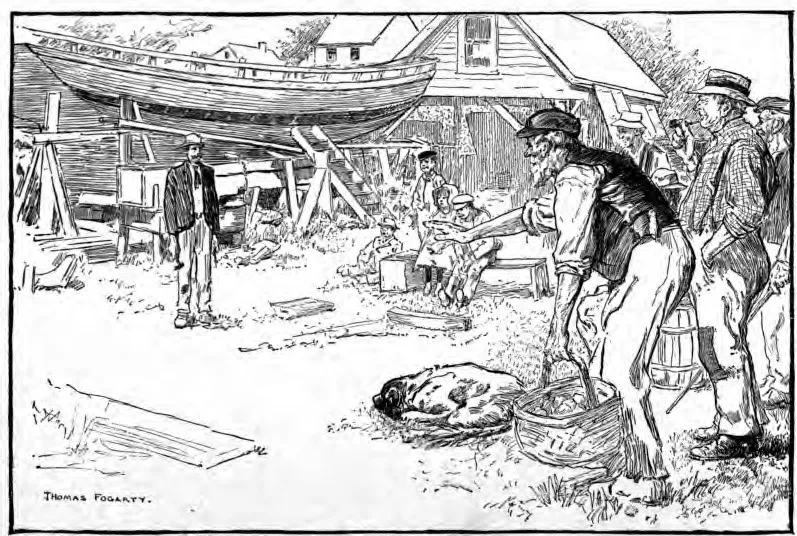
Photo: unknown artists - from book by Joshua Slocum, Public domain, via Wikimedia Commons
There's a version of the creative journey that gets told a lot. Someone discovers their thing, puts it out into the world, and the world responds. It's clean. It's linear. It makes for a great three-minute documentary segment.
Then there's the version that actually happens.
Years of making things nobody asked for. Notebooks that never got published. Projects that lived and died on a hard drive. Experiments that felt important at the time and embarrassing in retrospect. A slow, grinding accumulation of attempts that didn't go anywhere — at least not anywhere visible.
Most creators want to skip this part. And honestly? That instinct makes sense. We live in an environment that rewards speed. Post early, grow fast, capitalize on momentum. The whole infrastructure of modern creative platforms is built around the idea that visibility is the point.
But here's what that framing gets wrong: visibility isn't the foundation. It's the result.
What's Actually Happening in the Quiet
When nobody's watching, something strange and necessary takes place. You start making decisions for different reasons.
Without an audience to perform for, you stop optimizing for reaction and start optimizing for something harder to name — rightness, maybe. Or resonance. You make the thing that feels true instead of the thing that feels strategic. You follow threads that don't have an obvious payoff. You get weird. You get honest.
This is where voice actually comes from.
A lot of creators talk about finding their voice like it's something you stumble across, some buried treasure waiting to be discovered. But voice isn't found — it's built, slowly, through a thousand private decisions about what matters to you and what doesn't. It gets shaped by all the work you did when the only person who had to live with the result was you.
Rush past that phase and you end up with something that looks like a voice — a consistent aesthetic, a recognizable tone — but doesn't have the depth behind it. It's a costume, not a character.
The Archive Nobody Sees
If you go back and look at the early work of almost any creator who's made a lasting impact, you'll find something interesting: there's way more of it than you'd expect, and most of it was never meant to be seen.
Not drafts. Not rough cuts. Full, serious, completed work that just... existed privately. Journals. Recordings. Canvases stacked against a wall. Stories written for an audience of one.
This isn't a coincidence. It's evidence of a particular kind of creative seriousness — the kind that doesn't require external validation to keep going. The kind that treats the act of making as inherently worth doing, separate from whether anyone notices.
That hidden archive does something specific: it gives you range. It gives you a reservoir of explored territory that your public work can draw from without having to explain itself. When you've already wrestled with the hard questions privately, your public work carries a different kind of confidence. It's not performing certainty — it's operating from it.
The Trap of Early Recognition
Here's the thing about getting noticed before you're ready: it freezes you.
Not immediately. At first it feels like momentum. But when your early, unfinished version of yourself gets locked in as your public identity, every step you take toward actual growth feels like a betrayal of the audience that showed up for the original version.
Creators who blow up early often spend years trying to reconcile who they actually are with who people think they are. They get stuck performing a past self instead of building toward a future one.
The boring years protect you from that trap. They let you do your evolving in private, where the cost of changing your mind is zero and the cost of being wrong is just a lesson.
Systems Before Strategy
Something else happens in the quiet years that doesn't get talked about enough: you figure out how you actually work.
Not the aspirational version — not the morning routine you read about or the productivity system you downloaded. Your actual rhythms. The conditions under which you do your best thinking. The time of day when ideas come. The environment where execution happens. The rituals that aren't rituals because you invented them, just patterns that emerged because they worked.
This is operational knowledge, and it's invisible from the outside. Nobody posts about it. There's no viral thread about discovering that you write better at 11pm with bad coffee and a specific playlist. But that knowledge is infrastructure. It's what lets you sustain a creative practice across years instead of burning hot for a season and disappearing.
Creators who skip the quiet phase often skip this part too. They build an audience before they've built a practice, and when the pressure of that audience hits — the expectation of consistency, the demand for output — they don't have the internal scaffolding to hold it up.
Reframing the Unglamorous
Look, nobody's going to romanticize the years of low views and zero comments. That's not the move. The quiet phase is genuinely hard, and pretending it's secretly pleasant would be dishonest.
But there's a difference between hard and wasted. And a lot of creators are walking away from the most valuable work they could be doing because they've been told that work only counts if someone's watching.
The metrics don't show up on a dashboard. There's no analytics tab for how much your craft has deepened, how much clearer your thinking has gotten, how much more specific and honest your work has become. You just have to trust that it's happening — and keep going anyway.
That trust is maybe the hardest part of the whole thing. It requires believing that the work matters before the world tells you it does. It requires operating on a timeline that doesn't match the one the internet runs on.
The Long Payoff
Creators who put in the quiet years tend to have something that's hard to fake when they finally step into the light: depth. Their work has texture. There's more behind it than what's visible on the surface. And audiences — real ones, not just accumulated follower counts — can feel that difference even when they can't articulate it.
The boring years aren't the preamble to the story. They're the part of the story that makes everything else possible.
So if you're in it right now — the low-traffic, low-feedback, nobody-cares stretch — the worst thing you can do is treat it like a waiting room. This isn't where you wait for your creative life to start.
This is it. This is where the real work gets done.