Famous Too Fast: How Early Attention Can Freeze You in Place
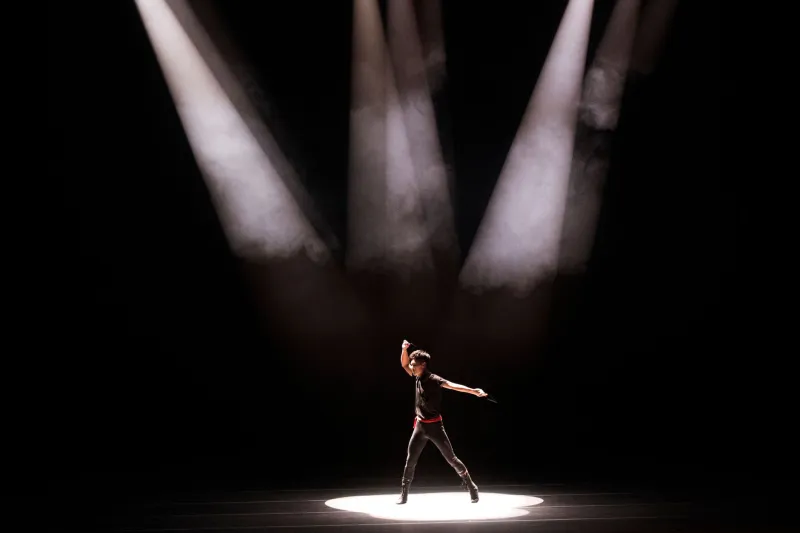
There's a version of success that looks incredible from the outside and feels like a slow suffocation from the inside. You hit on something early — a sound, a style, a format, a voice — and people respond. Really respond. Thousands of followers, press mentions, maybe a feature somewhere that puts your name in front of an audience you spent years dreaming about.
And then, almost without noticing it, you stop experimenting.
Not because you got lazy. Not because you ran out of ideas. But because every time you try something new, you can feel the audience pulling you back toward the version of yourself they already decided they loved.
The Audience You Win Is the Audience You Serve
Here's the thing nobody tells you about building an early following: the people who show up first aren't a neutral crowd. They showed up for something specific. They found you because of a particular piece of work, a particular moment, a particular vibe — and whether they mean to or not, they carry expectations.
That's not a criticism of audiences. It's just how attention works. People curate their feeds around what they already know they like. When you deliver something unexpected, the natural response is confusion, and confusion often reads as disappointment.
So you recalibrate. You pull back. You make the thing that worked before, just slightly different. And somewhere in that cycle, the experimenting stops — not with a dramatic decision, but with a thousand tiny adjustments made in response to what people clicked on.
Premature visibility doesn't kill your creativity all at once. It death-by-a-thousand-compromises it.
The Musician Who Got Stuck in Their Debut
Think about how many artists released a debut project that connected so deeply with a specific audience that every subsequent release became a negotiation between who they were becoming and who their fans needed them to stay. You've seen this play out in music constantly — an indie artist blows up with a raw, lo-fi record, then spends the next decade being told their more polished follow-ups "lost something." The thing they lost, of course, was the inexperience that made the first record feel intimate. But you can't unknow things. You can't un-grow.
The cruelest part? The audience isn't wrong to feel the loss. That early work was special. It's just that chasing it forever is a trap that costs the creator everything.
Relative Obscurity Is Actually a Creative Luxury
Here's what I've come to believe: the years before anyone's watching are some of the most valuable years of a creative life, and most people don't recognize that until the window closes.
When nobody's paying attention, you can be bad at things. You can try a format that completely falls apart. You can make the weird, half-formed thing that doesn't fit any category. You can publish the essay that contradicts your last essay. There's no continuity to protect, no brand to maintain, no audience to disappoint.
That freedom is productive. It's not wasted time — it's the period when you figure out what you actually think, what you're actually drawn to, what kind of work genuinely excites you versus what you've convinced yourself should excite you.
Early visibility collapses that window before it's done its job.
Deliberately Stepping Back
Some creators figure this out and do something counterintuitive: they intentionally reduce their visibility to buy back room to grow.
There's a pattern you see in certain long-career creatives — the ones who are still doing interesting work twenty years in. A lot of them have a chapter where they went quiet. Stopped posting, stopped performing, stopped publishing for a stretch. And when they came back, they came back as something slightly different. Slightly more themselves.
That's not failure. That's a strategic retreat from the version of you that got too loud too fast.
It's genuinely hard to do. Stepping back feels like throwing away something you worked incredibly hard to build. The follower count doesn't pause while you figure yourself out. The algorithm doesn't reward you for going dark for six months to experiment in private. Every metric is telling you to keep feeding the machine.
But some things can only happen in the quiet.
The Identity Lock
The deeper issue is what I'd call identity lock — the moment when the audience's perception of you hardens into something you feel obligated to maintain.
It usually happens gradually. You make a few pieces that get traction. People start describing you in certain terms. You get tagged in certain conversations. Your work shows up in certain playlists, certain roundups, certain mood boards. And slowly, a label forms around you.
Labels aren't inherently bad. They help people find you. But when the label arrives before you've had a chance to fully figure out who you are, it can start doing the thinking for you. You internalize it. You make decisions based on it. You filter new ideas through whether they fit the identity that already exists in the public mind.
That's the trap. Not the audience's fault. Not even really your fault. Just the natural physics of visibility operating on an identity that wasn't ready to be fixed in place yet.
What to Do If You're Already In It
If you're reading this and feeling the squeeze — if you've got an audience that showed up for a version of you that you're quietly outgrowing — here's what seems to actually work:
Introduce change incrementally, but keep introducing it. You don't have to blow up your whole creative identity overnight. But you do have to keep moving. Every piece of work should carry at least one thing that surprises you when it's done.
Talk to your audience like they're adults. A lot of creators assume their audience can't handle evolution. Some of them are right. But a lot of audiences are more flexible than creators give them credit for — they just need the creator to be honest about what's happening rather than pretending nothing changed.
Give yourself permission to lose some of them. This one's hard. But the audience that leaves because you grew isn't the audience that was going to be there for the long haul anyway. The people who stay through a creative evolution are the ones who were actually there for you, not just for the thing you made that one time.
Early Attention Isn't the Goal
The real goal — if we're being honest about what a creative life is actually for — isn't to get noticed as fast as possible. It's to make work that reflects who you genuinely are, across a long enough timeline that you get to find out who that actually is.
Getting noticed early can be part of that. But only if you stay loose enough to keep changing, keep experimenting, keep being willing to disappoint the version of your audience that fell in love with yesterday's you.
The most interesting creators I've ever encountered all have one thing in common: they made their most important work after they stopped caring about protecting their early reputation.
That's not a coincidence.