Less Is the Flex: Why the Creators Who Share Less Are Winning the Long Game
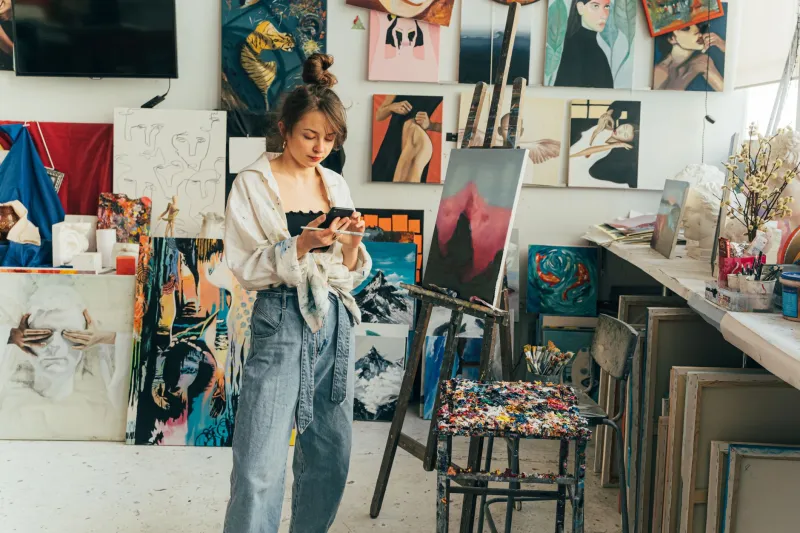
There's this moment — you probably know it — where you finish something you actually love. A piece of writing, a photo series, a track, a design. And before you've even had ten seconds to sit with it, you're already thinking about how to package it for stories. Which frame. Which caption. Which hashtag cluster.
We've been trained to do this. And most of us don't even realize the training happened.
The pressure to document everything isn't just exhausting. It's quietly eroding the one thing that makes creators genuinely interesting: the sense that there's more going on beneath the surface than what's on the feed.
The Algorithm Wants You Predictable. Your Audience Wants You Interesting.
Here's the tension nobody talks about honestly: the platforms are optimized for consistency and volume. Post three times a week. Stories every day. Go live. Repost your repost. The algorithm rewards creators who behave like content machines, and so most creators slowly become exactly that.
But audiences — real ones, the kind who actually care — are drawn to something different. They're drawn to depth. To the feeling that a person has a rich interior life that doesn't fully translate onto a grid. That there are rooms in the house you haven't been invited into yet.
When you show everything, you eliminate that feeling entirely. And once it's gone, it's genuinely hard to get back.
Think about the artists, writers, and musicians who feel the most culturally magnetic right now. Chances are, they're not the ones flooding your timeline daily. They're the ones you check in on. The ones whose posts feel like events rather than wallpaper.
Curation Is a Skill. Most People Treat It Like a Chore.
Curation gets talked about like it's just aesthetic — which photos go together, which colors match your brand palette. But real curation is about editorial judgment. It's deciding what your work actually means, and then choosing what to show in service of that meaning.
That's a completely different thing than posting everything and letting the audience sort it out.
When you curate deliberately, you're not hiding your work. You're framing it. You're giving people a way in that respects both the work and their attention. You're saying: I thought about this before I put it in front of you.
That signal — the signal that you have taste and standards — is incredibly rare in a creator economy where the dominant message is just keep shipping.
Mystery Isn't Withholding. It's Architecture.
Let's be clear about something: I'm not saying you should be cryptic for the sake of seeming deep. That's its own kind of performance, and audiences can smell it immediately.
What I'm talking about is structural. It's about understanding that what you don't show creates space for people to lean in. To wonder. To project their own meaning onto your work. That's not manipulation — it's how art has always functioned.
A novel doesn't explain every character's backstory in chapter one. A great album doesn't front-load every sonic idea it has. The reveal is paced. The tension is managed. The audience is led somewhere, not just dumped in front of everything at once.
Your creative output deserves the same architecture. Not every sketch needs to be a post. Not every rough idea needs a thread. Not every behind-the-scenes moment needs a reel.
Some things can just be yours for a while. And that's not a loss — that's fuel.
What You're Actually Giving Away When You Over-Share
Here's the part that stings a little: when you document every step of your creative process publicly, you're not just sharing your work. You're commodifying your curiosity.
The process of making something — the dead ends, the pivots, the 2am breakthroughs — is where your actual creative identity lives. It's the source. And when you turn it into content in real time, you're extracting value from it before it's had a chance to compound.
Creators who protect their process tend to make better work. Not because secrecy is virtuous, but because private thinking goes places that performative thinking never will. When you know something is going straight to an audience, you self-edit before you've even started. You optimize before you've explored.
That's a massive creative tax, and most people are paying it without realizing it.
The Practical Case for Pulling Back
None of this means you disappear. It means you get more intentional about what earns the right to be public.
A few questions worth sitting with: Does this piece of content add to the story I'm building, or does it just fill a slot? Am I sharing this because it matters, or because I haven't posted today and I'm anxious about it? If I held this back for a month and released it differently, would it land harder?
The creators who are genuinely building something — not just an audience, but a body of work — tend to treat their output like a collection rather than a stream. They think in terms of what belongs together. What the through-line is. What they want people to walk away understanding.
That's a different operating mode entirely. And it starts with the radical act of not sharing everything you make.
The Rarest Thing You Can Be Right Now
In a creator economy that rewards volume, the rarest thing you can be is considered. The person who clearly has more going on than their feed suggests. The artist whose work feels like a fraction of something larger. The creator who makes you want to dig deeper because you can tell there's more to find.
You can't manufacture that feeling by posting more. You build it by sharing less — but making what you share count for something.
The flex isn't the volume. The flex is the judgment. And judgment, real editorial judgment about what deserves to be seen and when, is the creative currency that almost nobody is investing in right now.
Which means the field is wide open for anyone willing to try.